
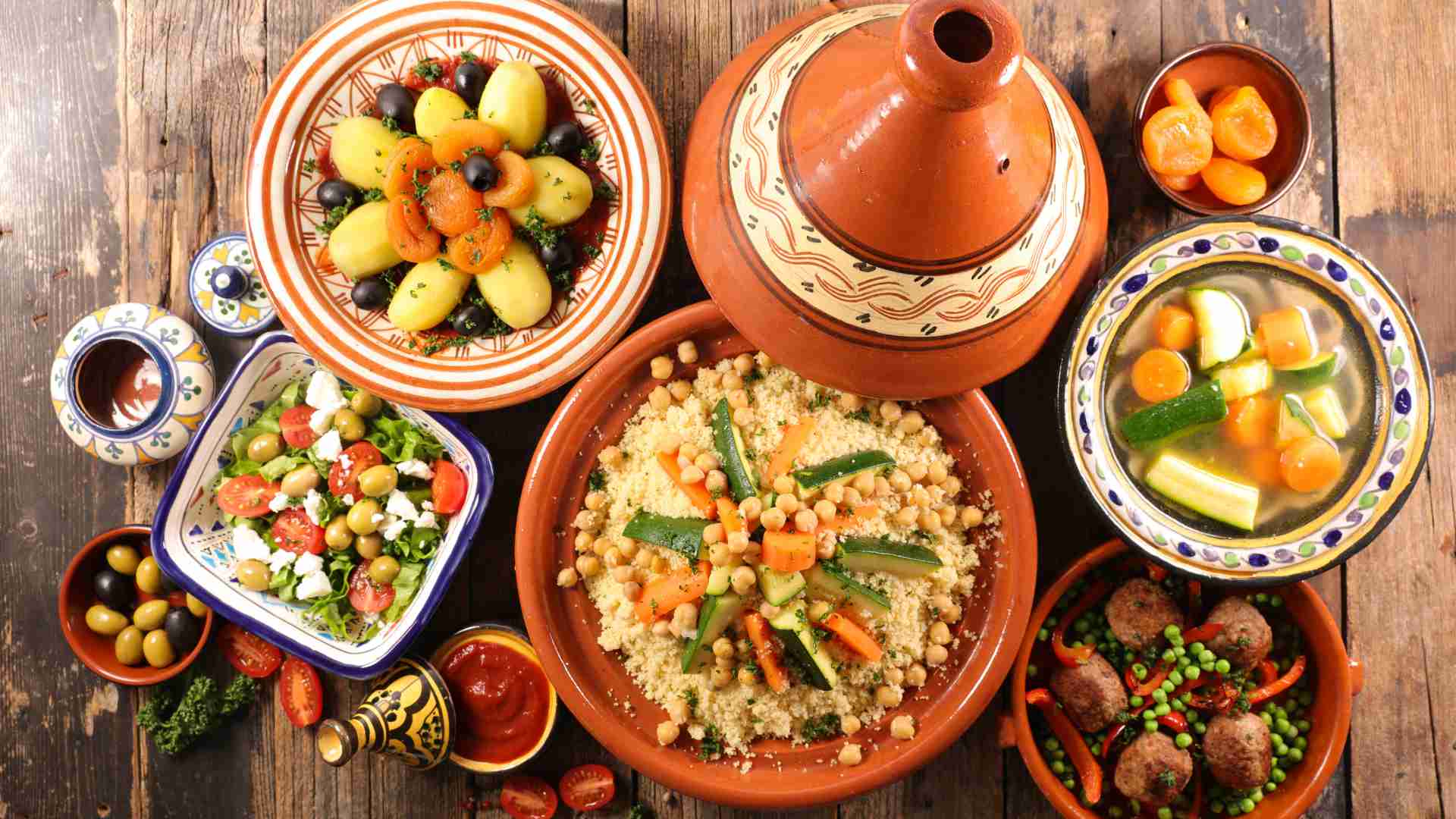
Morocco is a country of vivid colors, rich culture, and unforgettable flavors. But while its landscapes and historic cities captivate travelers, it’s the food that often leaves the deepest impression. Moroccan cuisine is a celebration of spices, fresh ingredients, and centuries of culinary traditions influenced by Berber, Arab, Andalusian, and French cultures. From bustling street food stalls to elegant riads, every meal tells a story.
Staple Dishes You Must Try
1. Tagine
The ultimate Moroccan comfort food. Cooked slowly in a conical clay pot, tagines come in countless variations:
- Chicken with preserved lemon and olives – a zesty, aromatic classic
- Lamb with prunes and almonds – a sweet-savory delight
- Vegetable tagines – for a hearty, vegetarian option
The slow-cooking method allows flavors to blend perfectly, resulting in tender, flavorful dishes that pair beautifully with warm, fluffy bread.
2. Couscous
Considered the national dish, couscous is usually served on Fridays with vegetables, chickpeas, and meat. The grains are light and fluffy, often steamed multiple times, and topped with rich, spiced stews. In some regions, you might encounter couscous with raisins or saffron, adding a unique sweetness and aroma.
3. Pastilla (Bastilla)
A Moroccan pastry masterpiece. Traditionally made with pigeon or chicken, almonds, and spices, wrapped in thin warqa dough, and dusted with powdered sugar and cinnamon. It’s a delicate combination of sweet and savory, perfect for special occasions.
4. Harira
This hearty soup is a Moroccan staple, especially during Ramadan. Made with tomatoes, lentils, chickpeas, herbs, and tender pieces of meat, it’s often served with dates and chebakia (a sesame cookie) for breaking the fast.
Street Food & Snacks
Moroccan streets are a food lover’s paradise. Some must-try items include:
- Msemen – square, layered flatbreads, perfect with honey or cheese
- Briouats – small, deep-fried pastries filled with meat, cheese, or vegetables
- Sfenj – Moroccan donuts, crispy on the outside, fluffy on the inside, usually dusted with sugar
- Freshly squeezed orange juice – a refreshing treat, especially in Marrakech or Fes
Sweet Treats & Desserts
Morocco has a rich dessert culture:
- Chebakia – fried, honey-coated cookies often eaten during Ramadan
- Kaab el Ghazal (Gazelle Horns) – almond-filled pastries shaped like a crescent
- Halwa Chebakia & almond pastries – found in pastry shops across the country
Mint tea, known as Moroccan whisky, is served throughout the day. It’s sweet and fragrant, often poured from a height to create foam—a ritual that symbolizes hospitality.
Regional Specialties
- Marrakech & Essaouira: Seafood dishes, fresh sardines, and coastal tagines
- Fes: Traditional dishes like pastilla, b’stilla royale, and slow-cooked lamb
- Atlas Mountains: Berber-inspired tagines with local vegetables and honey
- Sahara region: Camel meat tagines and date-based dishes
Dining Etiquette Tips
- Meals are usually shared, often eaten with the right hand
- Bread acts as both a utensil and side dish
- Offering mint tea is a sign of hospitality—always accept at least one cup
- In riads or family homes, meals are usually long and leisurely, so savor the experience
Final Thoughts
Moroccan cuisine is more than food—it’s a window into culture, history, and tradition. Every spice, every dish, and every tea ritual tells a story, from bustling souks to quiet mountain villages. Whether you’re enjoying a sweet pastry in Chefchaouen, a seafood tagine in Essaouira, or a candlelit dinner in a Marrakech riad, Moroccan food is an adventure for all your senses.